[?] Subscribe To This Site

XML RSS
Add to Google
Add to My Yahoo!
Add to My MSN
Subscribe with Bloglines


Home
Cat Breeds A-Z Photos of Breeds A-H
Photos of Breeds J-P
Photos of Breeds R-T
More Cats & Facts Fringe Cat Breeds
Wild Cats
Feral Cats
Cat Facts
Breeds Categorized
Rare Cat Breeds
Domestic Cat Size
Cats and Law
Cat History
Cat Health
Cat Appearance
Choose cat breed
Cat News
Cat Food
Declawing Cats
Fun and Cats Cat Videos
Cartoon Cats
Pictures of Cats
Warrior Cats
Top 4 Breeds Maine Coon
Traditional Siamese
Modern Siamese
Bengal Cats
Persian start here
PoC Admin + POC Updates
PoC Admin
Helmi Flick Photo
PoC Site Map

Andean Cat

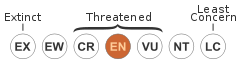
The Andean Cat is yet another wildcat that is either endangered or under threat of entering that fragile classification by the IUCN Red List (see IUCN Red List for Cats). Accordingly, I focus on conservation in this post. In order to do my bit I have donated $50 to the Andean Mountain Cat and Small Cats in S. America wildaboutcats.org project, through this website, the purpose of which is to help cats worldwide (see Pictures of Cats org Donations).

In 2002 Mel and Fiona Sunquist, the authors of Wild Cats Of The World say that this cat was one of the least known felids in South America. Jim Sanderson Ph.D., who could be called an expert on this cat species, perhaps the expert, is managing with his colleagues the Andean Cat Project in South America and has received the go ahead from the government to create the first Andean cat conservation and monitoring center.

This center is to be located in San Pedro de Atacama, Chile. Dr.Sanderson works with the local people to help create a better understanding of the conservation requirements of the Andean cat and there are now at least two large areas within the Andean cat range in which the local people are supportive of its conservation.

Andean Mountain Cat
Andean Mountain Cat
This photo is reproduced under a Wikimedia Commons license. I think that this cat is a stuffed cat in a museum.

IUCN Red List Endangered Category

Taxonomy

The scientific name is Leopardus jacobita. The genus Leopardus, in which this cat is included, contains most small Neotropical felids. Its inclusion is based on genetic analysis. Although the classification was based in part on a very small number of individual cats. The classification was also based on the size of the auditory chambers in the skull. It is not known how closely it is related to the Pampas cat (src: IUCN Red List of Threatened Species™ - "Red List").

Range

As stated in the name, its range is the Andes Mountains in the west of South America and is indicated in red on the map below, which is an embedded Google My Maps map. The range is based on the IUCN Red List and should be up to date. However, there is an opportunity, below, to go to the original map and refine it if you have the knowledge to do so.

I have created a map of the Andean cat range using Google My Maps. The intention is to let people contribute to it. Often precise information is not available to allow a map of the range of a wildcat to be drawn accurately. If anyone has the knowledge to refine the map then please contact me by email: mjbmeister[at]gmail.com, whereupon permission will be granted. You can then go to this link: Andean Cat Range - Google My Maps and amend it - thanks. The link opens in a new window. You can see the above map in larger format and some more information on the range of this cat here: Andean Cat Range.

The actual range occupies the central area of the Andes mountains and a map can be seen at this link: Map of Andean Cat's range. This is an external link to the IUCN Red List map. Links are occasionally broken, please note.

The Andes covers these countries: Argentina; Bolivia; Chile; Peru. The distribution of this cat is restricted to the higher areas of the Andes. The map below shows the range. A more detailed map, which as mentioned can be amended by collaborators, can be found here: Andean Mountain Cat Range (new window)

Andean cat range

These are the heights at which this cat has been seen in the countries mentioned:

Country - AreaHeight above sea level - meters
Argentina4,236
Southern Andes1,800
Chile3,714 to 4,414
Bolivia4,100 +
Peru4,000 +


The range in Peru has been found to extend from the far south to 800 kms away in the center of Peru. The records of distribution are down to the efforts of the Andean Cat Alliance (www.gatoandino.org). Although, sightings of this scarce cat are very rare. Apparently less than 2500 cats are believed to exist.

Population

As mentioned, this is low (not untypical for wildcats, sadly). Although the Pampas cat, a close relative, is similar in appearance in the high Andes, the Andean cat is much rarer. Apparently, the local people have difficulty distinguishing the Pampas cat from the Andean cat. This may prove important as they are killed sometimes for what can only be regarded in modern times as superstitious reasons (education is the answer, see below). There is a lower genetic diversity in this cat species compared to the Pampas cat (see Cat Inbreeding Means Poor Sperm). A population estimate was one cat per 5 square kilometers ( 25,000 ha area in northern Chile). There are none in captivity as far as is known. The population size trend is, unsurprisingly, downwards.

Andean Cat
Andean Cat - Photograph copyright Jim Sanderson, Ph.D.

Habitat - Ecology - Appearance

This wildcat is found in arid and sparse land (note the photograph above). The high Andes has no forest. The terrain is rocky and steep. This cat is thought to be solitary but can be seen in pairs. This cat is mainly crepuscular, it seems (active at dusk and dawn and night - in line with domestic cats). This is because its main prey is also crepuscular, the Mountain Vizcacha. As the terrain is sparse and poor in regards to supporting wildlife, the range is probably large (estimated home range of 65.5 km˛).

The Andean cat is medium sized, similar in size to the domestic cat. Appearance is as follows:

Physical FeatureFigures
Adult length740 to 850 mm
Sub-adult577 to 600 mm
Adult Tail length410 to 485 mm
TailVery long (66 - 75% of the head and body length). It is thick and cylindrical, fluffy and with 6 to 9 wide dark brown to black rings. A long tail helps with balance (see also Clouded Leopard)
Adult female weight4.5 kg
FurAsh grey with brown-yellowish blotches that are distributed as vertical lines at both sides of the body.
JuvenilesLighter color with smaller blotches and more of them.


The Threats to the Andean Cat

The threats to the survival of this rare wildcat are set out in tabular form for ease of reference below:

Question regarding threat Answer
Top threat Hunting despite being banned in Chile (a crime) and protected (Peru, Bolivia and Argentina).
Lesser threat Prey reduction, habitat loss and fragmentation (this is in part the cause of the prey reduction of course).
Reason for hunting (1) Considered sacred animal. Stuffed Andean cats used in harvest festivals (2) People consider the Andean Cat a predator of small livestock (Argentina, Chile and Peru) (3) For traditional medicine and food (c.f. Cat Meat)
Other reason for killing of this catShepherd's dogs
How many people hunt small cats? 69% of people
Possible cause of fragmentation Mountain Chinchilla, prey of Andean Cat hunted to extinction
Reason for habitat destructionMining, extraction for fuel, cattle grazing


Conservation

As mentioned above the Andean cat is protected in the countries concerned to little effect, it seems, due to poor or little enforcement of legislation. This is a problem worldwide due to lack of commitment from the authorities. I say that the IUCN Red List should take this into account (i.e. project ahead not just assess the present, which seems to be the case). This wild cat is listed in CITES Appendix I (see IUCN Red List for cats to see overlap between Appendix I and Red List).

The Andean Cat Conservation Action Plan list six objectives in conservation:

  • Determine distribution and threat (I presume this means more precisely and currently).
  • Research further ecology and biology.
  • Educate to minimize negative human impact.
  • Improve management of conservation and develop initiatives.
  • Promote implementation of conservation.
  • Continuously evaluate.
I find these (summarized by me) objectives worthy but ask whether they will be implemented properly. I have doubts but as mentioned the best man to manage conservation is actively involved, Jim Sanderson, and I would think he is quite possibly down there right now (July 2009) working on the conservation center. The Andean cat is the most endangered wild cat in the Americas.


Update 7th June 2009:

Jim Sanderson Ph.D. is recognised as one of the top small wildcat researchers and conservationist in the world and he is establishing an Andean Cat Conservation Center at San Pedro de Atacama, Chile. He has makes these points about this cat:

(1) It is the only endangered cat in the Americas with an estimated fewer than 2,000 existing (at Feb 2009). (2) With local help (Andean Cat Alliance) he has identified where there are significant populations of this cat. (3) There are five threats to this cat's survival in the wild.

(a) Many people of the area believe that this cat carries supernatural powers which can be harnessed for the benefit of a person if the cat is killed and it is then decorated and displayed. This wild cat is easy to kill because it is not afraid of people (b) In many areas eating the prey of this wild cat, viscachas, is common. Viscachas are the primary source of food for this wildcat (c) Mining activity destroys habitat (d) Exotic species that have been introduced threaten this wildcat (e) The feeding areas of viscachas are threatened by global warming as the glaciers that maintain these areas are melting.

Jim Sanderson is working with local people to mitigate these threats.

Video

Unsurprisingly, there are no videos of this cat so to give a flavor of life in the Andes Mountains here is a video. The survival of this cat depends on the people:

Return to Wild Cat Species

My Thanks to http://www.iucnredlist.org.


footer for Andean Cat page