
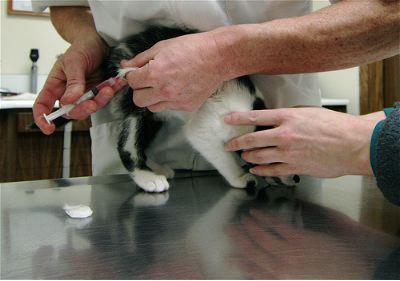
under creative commons

Introduction
The cat vaccination recommendations given to me by my vet (as at 2007) were to come back every year. This was endorsed by boarding catteries in the UK who insist on a certificate. The routine booster vaccinations in the UK are Feligen RCP and Leucogen (or equivalent). An equivalent booster vaccination is the (1) Nobivac Tricat and (2) Nobivac FELV. That is or was the “routine” but in truth it is less certain than that.
The whole subject of vaccinations is fraught with difficulty and lack of clarity. The public, people who keep cats, are in the hands of their veterinarian and their views vary widely, it seems to me. Information on cat vaccination recommendations is scrambled because of a number of factors:
Financial Profit
Pressure to make financial profit is probably the biggest driving factor in how frequently to administer cat vaccinations. This is profit for the big drug companies and the veterinarians themselves. To bring in a cat every year is a wonderful way to build bread a butter business. The “shot” can be administered and a check up given at the same time. The check up will no doubt result in some further treatment. Bingo. Nice profit. Sounds cynical? It is the truth in my opinion.
Research
Another factor which seems to blur the picture is that research appears to be ongoing and is not clear itself. One thing is certain, though, is that there has been over vaccinating for the reason above, I suspect. Also who does the research. Probably big drug companies who are driven by one thing: $.
Risk
Cat vaccination recommendations must be based on risk assessment. There are two risks. The risk of catching the disease for which a vaccination is given and the risk of being injured by the vaccination. These risks need to be researched and they are dependent on the cat’s health, age, and behavior (indoor cat or outdoor cat). When this complex picture is made more complex by possibly biased research in favour of vaccinating you can see how confusing it is for laypeople like me and other cat owners.
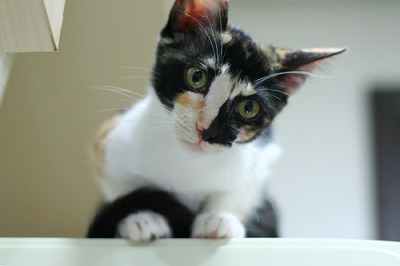
Vaccinated cat – photo © by fofurasfelinas. How do I know?
The photographer said so. She’s one of the best amateur cat
photographers and photographs rescue cats.
This one is a calico cat – gorgeous.
Background
The first interesting thing about cat vaccinations is that humans don’t have booster vaccinations every year. Why are we different? We aren’t that different except we are people and we can make requests and cats can’t. Vaccinations last a long time and don’t need boosting for humans. That single factor must inform us as to how we treat our cats.
Most people receive very few regular vaccinations once they reach adulthood. We only get special vaccinations as and when required (e.g. travelling abroad).
It is now thought that yearly cat vaccinations may be unnecessary and could on occasions cause health problems for your cat. The views of vets differ probably because some are more financially ambitious than others.
Without widespread disease (epidemics), it is sensible to ask whether it is wise to vaccinate regularly, particularly as vaccination carries its own potential health risk?
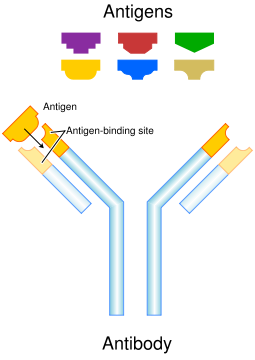
Let us remind ourselves that a vaccination is a proactive measure based on the risk of getting a disease. A vaccine works by stimulating the cat’s natural immune system to produce antibodies. These are immunoglobulins, which identify and neutralize foreign objects such as bacteria and viruses.
The need for vaccinations is a decision based on balancing risks (like an insurance policy).
As mentioned, my reading of the situation is that this is a developing area (i.e. work in progress) and that there is currently not enough information for definite overriding recommendations to be given by the authorities. But, it seems that cat vaccination recommendations should be based on the premise that a vaccination is a procedure (one off) as opposed to a necessary and automatic event.
That means that vets and cat keepers need to make individual decisions. These will vary depending on the vet and the personal circumstances of the cat concerned (some cats are more at risk than others). Individual vets will give individual cat vaccination recommendations.
Decisions
Based on the above introduction, the decision whether to forgo a vaccination will be made by your vet, but talk to him or her about the need for a vaccination. The key is no doubt to find a vet who is genuinely interested in providing care for your cat of the highest standard and who makes decisions in that regard that are devoid of monetary concerns.
We are reliant on vets because if we research the issues ourselves we do not find clarity. A good veterinarian will have the knowledge to find clarity of decision making.
 |
The Vaccinations
The first of the vaccinations mentioned above is a multi-vaccination against (a) Feline Panleucopenia, (b) Feline Viral Rhinotracheitis and (c) Feline Calicivirus. The second (FELV) is Feline Leukemia. Vaccines don’t make the cat immune to the disease. They reduce the severity.
(a) Feline Panleukopenia: This is Feline Distemper. It is caused by the feline parvovirus (FPV). It is nasty, spreads fast and can kill (especially young cats). This can be given, it seems, every 3 years for adult cats.
(b) Feline Viral Rhinotracheitis: This is the Feline Herpes Virus (FHV). This causes cat flu and is very infectious. It can kill (particularly kittens) and can cause permanent damage to kittens.
(c) Feline Calicivirus: This is also a cause of cat flu. The vaccine can apparently be given every 3 years.
(d) Rabies (but this may be in only certain countries)
FeLV is a serious disease. The vaccine, it could be argued, is also a serious procedure (my thought) as it has the potential to cause Vaccine Related Sarcoma (cancer) it seems (see cat health and cancer). Research has been carried out and the incidence of this occurring is low being 1 in 1,000 to 3 in 10,000 cats. The rabies vaccine may also result in cancer (according to some studies)
See this page if your cat is sneezing. See this page if you want to read about FELV and adopting cats suffering from this disease.
Cat vaccination recommendations – Update – 21-7-08
Having read and researched this matter some more please forgive me for updating this page. Veterinarians thought that vaccinations were safe procedures without risk. It almost seemed at one time as if they should be done automatically.
However, vaccinations can cause short, medium and long term health problems:
- short term – anaphylactic shock – I’d make sure your cat was alright after the vaccination and wait for a while in or near the surgery in case. This may sound severe but it is all about risk taking in the end.
- medium – injection site reactions.
- long term – development of cancers at the site of the injection caused by some of the ingredients of the vaccine.
- there is a suggestion that over vaccinating can cause or contribute to a condition called Feline Hyperesthesia.
- immune system damage.
Feline Fibrosarcoma a form of cancer can (rarely I presume – actually 1 in 1,000 to 1 in 10,000 according to the Wikipedia author) start growing at the site of the vaccination. Studies revealed that multiple repeat vaccinations (I also presume yearly) at the same part of the body could result in this cancer developing.
 | Feline Multi Essentials Cat Vitamins – $ 37.95 Feline Multi Essential is a multi vitamin for your cat, providing many general health benefits. It is a nutritious herbal extract which improves digestion and helps your cat absorb nutrients from his food. |
It is not clear as far as I can see as to what aspect of the vaccination exactly causes the cancer. It might be the immune-booster substances in certain vaccines. As a result new recommendations were instigated (see below). It seems that additives to the vaccine called adjuvants are responsible. These are substances that modify the effect of the vaccine and in the case of feline vaccines is composed of aluminium, which caused inflammation at he site of the vaccination.
The standard vaccines are listed above. There are others. Consideration should be given by the vet before administering the others. I would have thought that even the standard vaccinations should no necessarily be given yearly if for example the cat is old, indoors all the time and there is no contact with other cats.
Further Update: The American Association of Feline Practitioners have made cat vaccination recommendations:
- Vaccine for feline leukemia virus (a non-core vaccine) (FeLV) be given only to high risk cats and kittens
- the core vaccines referred to above (a-c) be given every three years to adult cats (what happens to kittens?)
- Vaccines should be administered in areas that would make surgical removal of Feline Fibrosarcoma easier should it occur.
- A rabies vaccination not containing an aluminium adjuvant does not apparently cause inflammation. I don’t know if this vaccine was created at the instigation of The American Association of Feline Practitioners.
Note: these are my views. The views of people other than vets can be useful. Vets are fantastic but they are in business. If you want to just see a chart with American Association of Feline Practitioner’s Guide to Vaccinations when considering a protocol for your cats, then click on this link, but you might do that after at least skimming this page (link to page deleted sorry)
Further update Feb 2009:
Here is a sample of some views from cat breeders. Their views differ as do the views of vets. This can cause uncertainty and worry for those trying to do their best for their cats and in deciding the best cat vaccination recommendations:
Do not have your vet give the three way and the rabies during the same visit!
Ft. Dodge all-killed has aluminum adjuvant in it and that is what causes point of injection cancers and lumps forming as well as suspected immune reactions. Ft. Dodge is the only mfr. to have come up with a calici vaccine that protects against virulent fatal systemic calici,and that is MLV.
Using Fort Dodge 3-way killed for over 15 years and have never had a kitten have a reaction
Unfortunately, consulting with vets is not always the wisest decision.
Intra-nasal vaccines — sometimes these vaccines cause problems in kittens.
I have never heard of any problems with Ultranasal vaccines in kittens when used properly.
It does list the FeLV as being NON CORE – that means it is optional – the only thing they list as Core are FVRCP & Rabies where required by law.
Further update July 2009: Dr. Rogers of the Critter Fixer Pet Hospital, Inc.(link opens in a new window) is clearly a man of integrity and does the right thing for animals. I have not met him and don’t know him. I can only judge by what he says and he says the following on rabies vaccinations. This is not verbatim as that would be a copyright violation.
Scientific research has shown that vaccinations for Rabies, distemper and parvovirus work for at least 7 years. Yearly booster shots have no benefit. (My comment: The opposite is the case because of the risk associated with delivering a vaccination). However, the law in Texas requires that the rabies vaccination be carried out yearly. This is too much Dr. Rogers says and he has tried to change the law. Non-adjuvant type vaccines that are licensed for a year can be used to minimise the risk of getting cancer from a vaccination.
Cat vaccination recommendations – Conclusion
If there are conclusions it is these:
- Don’t assume that the routine vaccinations should be carried out every year. Discuss the matter with a good vet to get the best cat vaccination recommendations for your cat.
- Don’t assume cat vaccinations are always safe, they are not. Adjuvanted vaccines have been incriminated as a cause of Injection Site Fibrosarcoma in cats. This form of cancer will kill your cat. There is still a question mark over the whole concept of vaccinating. Vaccinations can damage your cat’s immune system.
- Cats who are exposed more (e.g. cats who stay out a lot or meet other cats a lot) to the transmission of disease are more at risk and that plays a part in decision making.
- Vaccinations are a balancing act between the risk of getting the disease which the vaccination is designed to protect against and the risk of getting ill because of the vaccination. Only one person can decide that – the vet. Therefore he or she must be reliable.
- The vet advises, you decide. Stand up to a vet and don’t take the usual platitudes without questioning if you are concerned about your cat.
- Vaccinations are one part of the many elements needed to create a healthy environment and life for cats. Cat Vaccination recommendations need to take that into account.
I was going to resist trying to actually state some cat vaccination recommendations but I think I can. It will always be a compromise and the following cat vaccination recommendations come from the “Irreverent Vet” on the PetPlace.com website. I think this is the website owner’s thoughts (a vet) and my judgment is that they are reasonable. In the end, regrettably, we have to make a judgment as we cannot wholly rely on our veterinarian, which frankly is a shocking state of affairs:
Indoor Cats – no risk of exposure to outside cats
Full set of kitten vaccinations & booster when one year of age. Rabies vaccinations are governed by law in the USA. The minimum is administered. Thereafter vaccinations are three yearly until aged 10, when they stop.
Indoor and Outdoor cats
Full set of kitten vaccinations & booster when one year of age. Rabies vaccinations are governed by law in the USA. The minimum is administered. These cats are also vaccinated for feline leukemia virus and feline immunodeficiency virus on a yearly basis. They are also vaccinated for the feline distemper combination vaccine on a three yearly basis. At aged 10 vaccinations stop.
As for me and my cat, I stopped vaccinations ages ago because I decided that she didn’t need them on a balance of risk as she is an old semi-indoor cat who was well vaccinated (over vaccinated) in the early years of her life. Also I have to say that I think even the moderated recommendations by the “Irreverent Vet” are too high. There are real question marks against vaccinations. I wonder what would happen if we stopped altogether?
It is also worth remembering that even experienced cat breeders who routinely provide medical care for their cats are sometimes unsure or have conflicting opinions on cat vaccination recommendations.
Stop the Shots!: Are Vaccinations Killing Our Pets?
This is a book available at Amazon. Just click on the link.
Picture of an antibody: published under Wikimedia Commons. This was originally a Work of the United States Government. Author: Fvasconcellos
Cat Vaccination recommendations – Sources:
- As stated in the text and:
- Myself
- Your Cat by Dr. Hodgkins
- The Veterinarian’s Guide to Your Cat’s Symptoms
- Wikipedia (antibody image)
- http://www.critterfixer.com/


I feel exactly the same as you. Humans don’t need boosters so why do cats? Money that’s why. They are changing though. Vets don’t use vaccinations so much these days as a way to get customers in to make money.